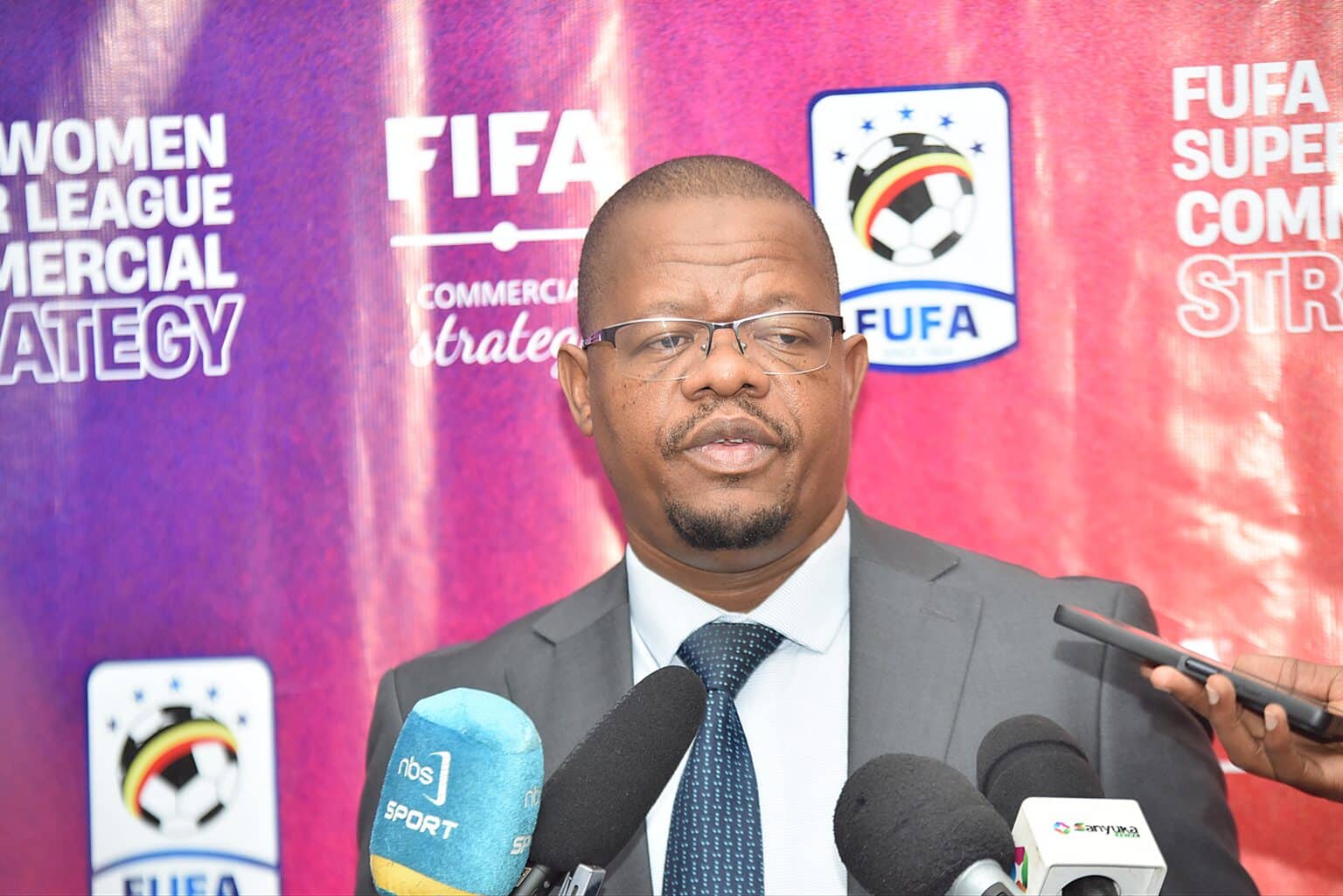
FUFA President Moses Hashim Magogo struck a confident, forward looking tone on Tuesday as the Federation of Uganda Football Associations launched a bold commercial strategy aimed at turning the FUFA Women Super League (FWSL) into a fully professional, sustainable competition.
Speaking at Imperial Royale Hotel in Kampala, Magogo said the strategy would tackle long-standing challenges that have slowed the growth of women’s football, including limited television coverage and weak commercial support.
“When this strategy is embraced, many of the problems affecting women’s football will be addressed, including the low number of televised games,” Magogo said.
“A single live broadcast costs over 20 million shillings. This long-term plan, backed by funding, will help overcome that.”
Developed with FIFA, the strategy runs from 2026 to 2029 and marks a shift from donor-dependent operations to a sponsor-driven, commercially viable league.
The launch brought together league clubs, sponsors, media practitioners, and football influencers, signaling a collective commitment to action.
The plan rests on four pillars. The first is revenue generation and financial sustainability. FUFA projects league revenue to grow from UGX 2 billion to more than UGX 3.2 billion over the next four years, a leap Magogo says will improve player welfare, strengthen club structures, and raise competitiveness.
“Financial stability is the foundation,” he said. “With predictable income, clubs can plan, invest, and retain talent, while the league becomes more attractive to broadcasters and sponsors.”
The second pillar focuses on media visibility and fan engagement. FUFA aims to increase monthly audience reach from 250,000 to over 2.5 million through enhanced broadcasting and a stronger digital presence.
“For the league to grow, people must see it, talk about it, and connect with it,” Magogo said.
The third pillar is brand development and market positioning. FUFA intends to establish the FWSL as a premium national brand linked to women’s empowerment and sporting excellence, targeting over 75 percent national brand awareness by 2029.
The final pillar centers on league quality and competitiveness, with full professionalization the ultimate goal.
A professional league, FUFA says, will attract and retain top talent, raise standards of play, and create a clear pathway for players to reach the highest levels.
Magogo emphasized that stronger commercial support will boost player welfare, matchday experience and overall competitiveness, creating a virtuous cycle benefiting clubs, players, and fans.
FIFA’s Women’s Football Lead for Africa, Doreen Nabwire, praised the initiative, saying it aligns with FIFA’s global vision for women’s football.
She highlighted its broader impact, including increasing participation, structuring competitions, building capacity for officials, and expanding women’s representation in decision-making roles.
“This strategy strengthens competitions, builds capacity, and ensures women are heard where key football decisions are made,” Nabwire said.
The launch of the FWSL Commercial Strategy signals a shift in FUFA’s approach from short-term survival to long-term investment.