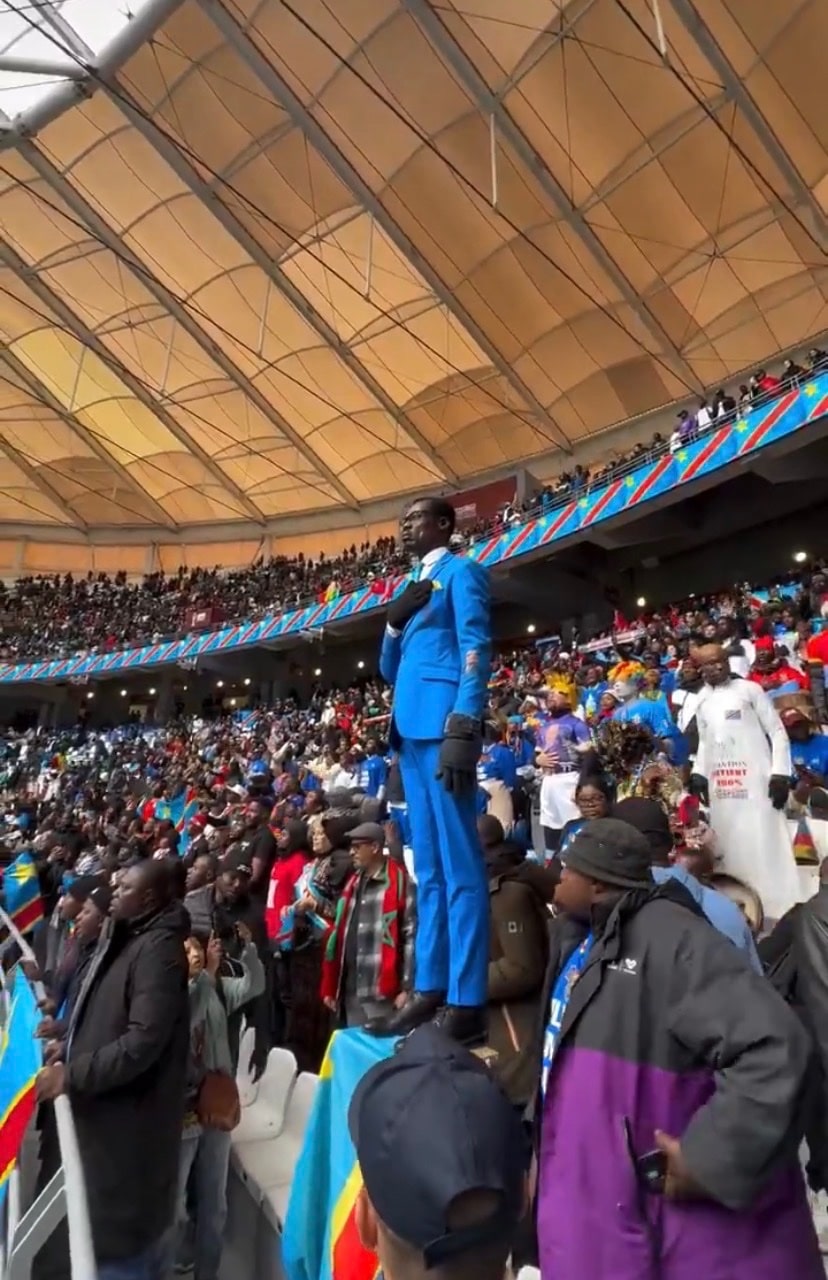
As DR Congo fought through Group D of the 2025 Africa Cup of Nations, collecting seven points from two wins and a draw to book a place in the Round of 16, another story unfolded far from the pitch.
High in the stands stood Michel Kuka Mboladinga known simply as Lumumba. For every group match, he remained on his feet for the full 90 minutes.
He did not cheer. He did not move. One arm raised toward the sky, he held the same pose from kickoff to final whistle.
Against Senegal. Against Botswana. Match after match, unchanged.
While the Leopards chased goals and points, Lumumba carried memory and meaning. His silent salute echoed the statues of Patrice Lumumba, the DR Congo’s independence hero, frozen in time yet alive in spirit.
The gesture was intentional. By standing motionless with one arm raised, Mboladinga honoured Patrice Lumumba, the nation’s first prime minister and a symbol of African resistance, assassinated in 1961.
In a stadium built for sound and movement, his stillness stood out. Cameras found him. Fans whispered. Social media spread the image.
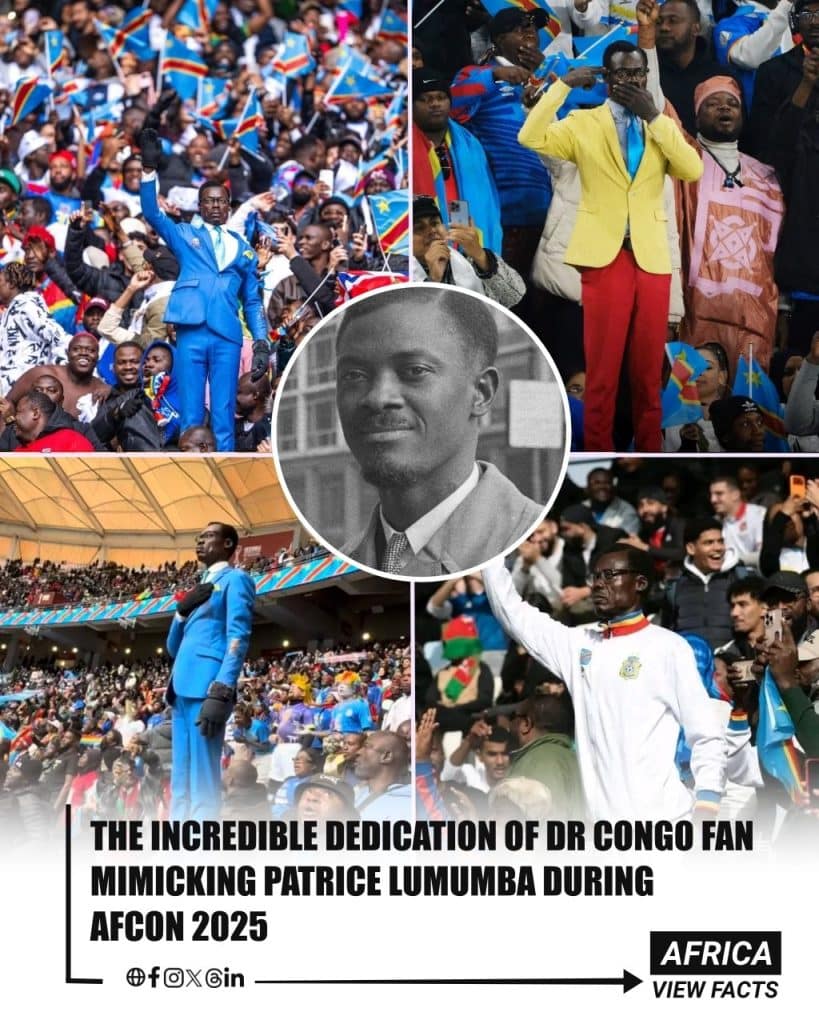
What began as a personal act became a shared moment, turning football into a stage for history.
Without chants or banners, he reminded the continent that football in Africa often carries more than sport, it carries identity.
Where football meets history
Patrice Lumumba led Congo to independence in 1960, speaking boldly about unity, dignity and self-rule. His execution a year later was meant to erase his voice. It did not.
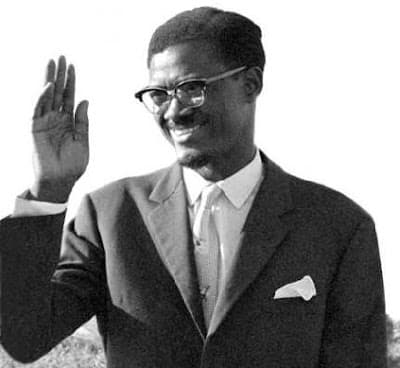
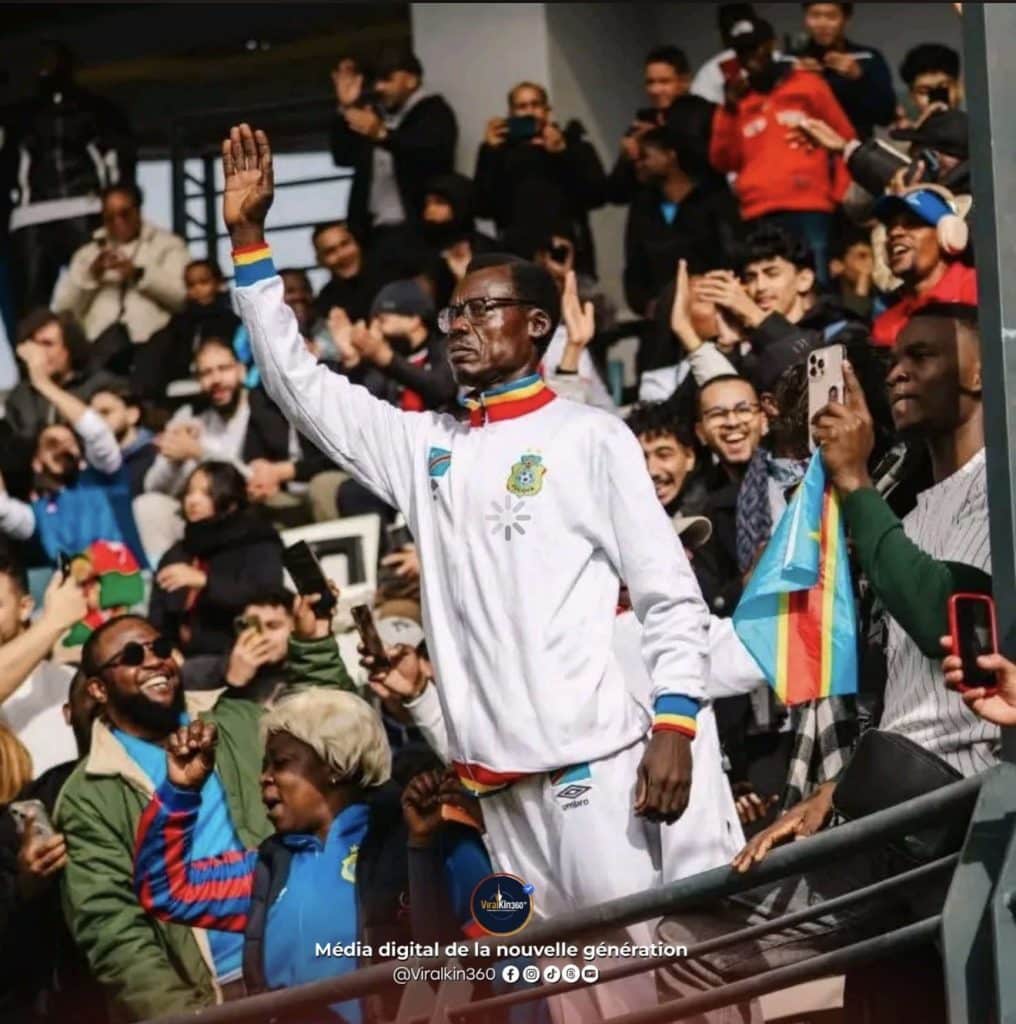
His words still endure. His image still stands. And at AFCON 2025, in the middle of roaring crowds and flashing lights, Michel Kuka Mboladinga gave him life once more silently, powerfully, from the terraces.
History spoke again. This time, it did not need a microphone.